Soft Boiled Eggs — Perfect Runny Yolks

Soft boiled eggs mean set whites and a runny yolk you can dip toast into. For a large egg from the fridge lowered into already-boiling water, aim for about 6 minutes, then move the eggs straight into ice water so they stop cooking.
That is the whole method in one sentence. The rest of this page is how to hit Soft reliably and what to tweak when the first batch is a little firm or a little loose.
The soft boiled eggs method
- Bring a pot of water to a rolling boil (enough water to cover the eggs by about an inch).
- Lower large fridge eggs in gently with a spoon so shells do not crack.
- Start the boiled eggs timer on Soft the moment they are in.
- When it rings (~6:00 at sea level for fridge + boiling-water start), transfer eggs to ice water for a few minutes.
Serve in egg cups with toast soldiers, or peel carefully for bowls and salads after the ice bath.
Ice bath matters
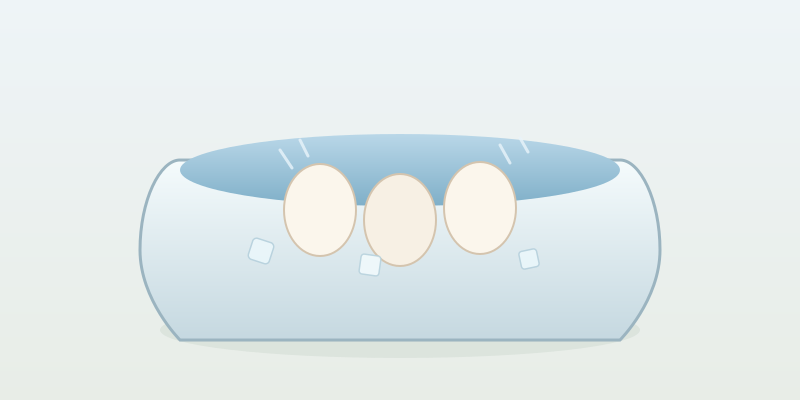
Ice water stops carryover heat so Soft stays runny, and it makes peeling a little easier once the white firms at the surface.
Fridge vs room temperature
Cold eggs from the fridge are the default. Room-temperature eggs finish a bit sooner — switch Starting temperature on the timer so Soft does not overshoot into jammy territory.
Soft vs jammy vs medium
Soft is dippy. If you want a thicker, custardy centre instead, choose Jammy (~6:45). Medium sets more of the yolk while keeping a fudgy middle. For the full chart across all four doneness levels, see how long to boil eggs.
Cold-water start for soft eggs
Some cooks prefer starting soft boiled eggs in cold water. Cover with cold water, bring to a boil, then start Soft — and set the timer’s Start method to cold-water so the shorter from-boil time applies. Still ice-bath when the alarm sounds.
Peeling and serving tips
Crack gently, peel under a thin stream of cool water, and work from the wider end where the air pocket sits. Fresh eggs are harder to peel; slightly older eggs usually slip out of the shell more easily.
When Soft still feels wrong
- Yolks too firm → try 15–30 seconds less, or confirm you did not leave them in hot water after the timer.
- Whites too loose → add 15–30 seconds, or make sure the pot stayed at a gentle boil the whole time.
- Cooking above ~3,000 ft → use the altitude control on the boiled eggs timer; Soft needs more minutes as elevation rises.
Open the free timer, tap Soft, and cook the next batch without watching the clock.
Soft boiled eggs FAQ
How long for soft boiled eggs?
About 6 minutes for a large fridge-cold egg into already-boiling water. Ice-bath immediately so the yolk stays runny.
Why are my soft boiled eggs still underdone?
The water may have dropped off the boil when eggs went in, or the eggs were very large/cold. Wait for a return to a gentle boil before trusting the clock, or add 15–30 seconds next time.
Should I peel soft boiled eggs?
For toast soldiers, crack the top and scoop. For ramen or salads, ice-bath first, then peel gently under cool water — the firmer white helps, but soft yolks need a light touch.
Soft boiled eggs vs jammy?
Soft is runny and dippable. Jammy is thicker and custardy in the centre (about 6:45 for large fridge eggs). Use Soft or Jammy on the timer depending on which texture you want.